UV flatbed printing does not print on paper that is then mounted: it prints straight onto the piece itself. The substrate sits on the machine bed, and the ink is laid down and cured instantly with ultraviolet light, so the piece comes off ready to handle.
Almost any rigid substrate
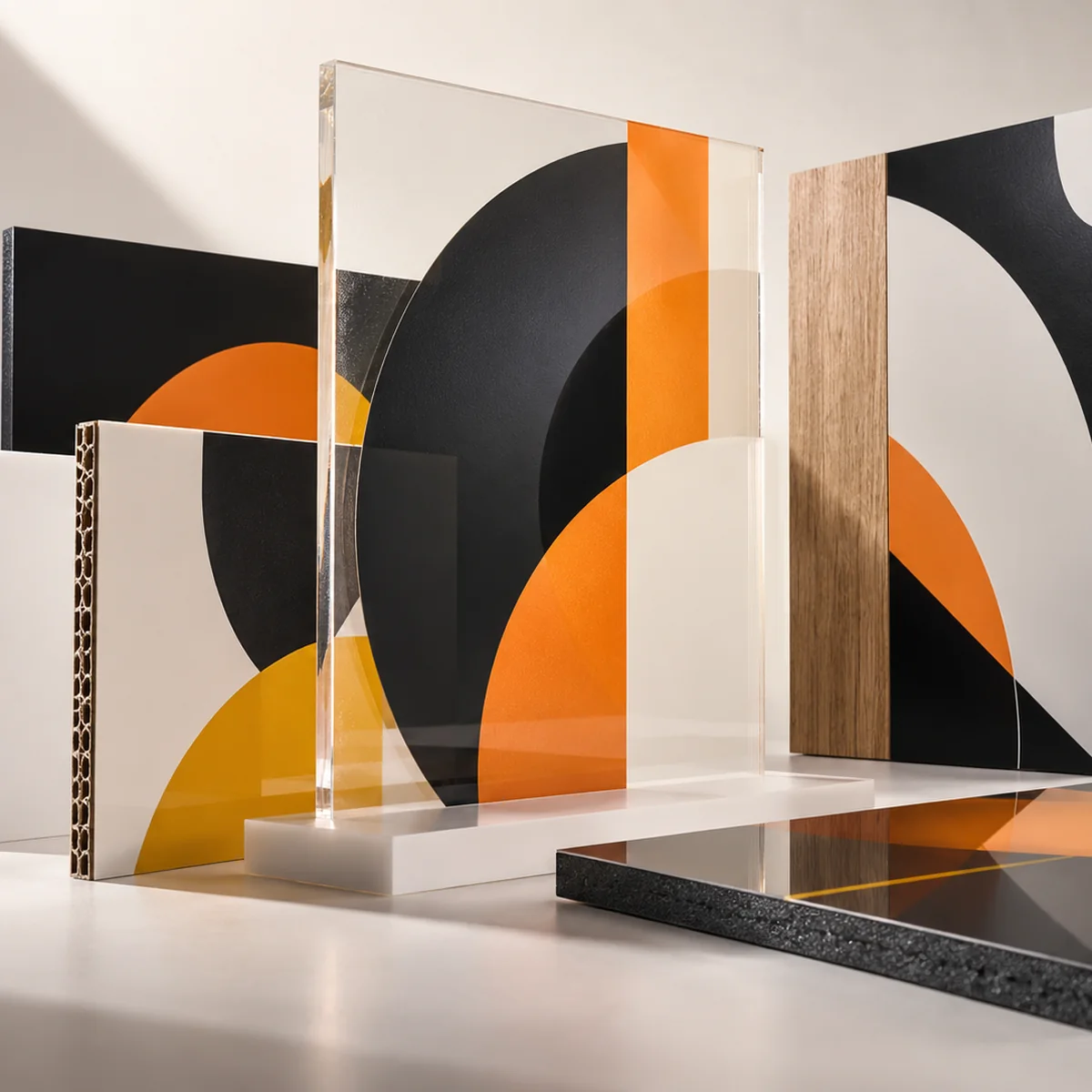
The limits are size and thickness, not material: up to 1600 × 2500 mm and up to 5 cm thick. Within those dimensions we print on board, plastic, acrylic, wood panels and even finished items such as tables.
- Board and paperboard
- Corrugated board
- Foam board
- Rigid plastics and PVC
- Acrylic (PMMA)
- Aluminium composite
- Wood panels
- Tables and furniture
- Transparent substrates
- Metallic substrates
That opens up work offset simply cannot do: a sheet of acrylic several millimetres thick, a wooden panel or a furniture surface printed directly, with no vinyl or laminate in between.
White ink
White ink is what lets us print true colour on substrates that are not white.
As a base
Underneath the colour, so it keeps its strength on transparent, dark or metallic substrates.
As a colour
White printed on a coloured or clear background, as one more shade in the design.
Selectively
Only in certain areas, so the substrate itself shows through elsewhere: the wood, the transparency or the metallic finish.
Small quantities, versions and prototypes
With no plates and no make-ready, digital printing is the obvious way to produce small quantities. It is also how you get a prototype in front of your client before committing to a run, or produce a series where every piece carries different text or a different image.
For custom shapes we have cutting plotters that cut without a die, and the rest of the finishing and hand finishing are done in-house.
What we use it for
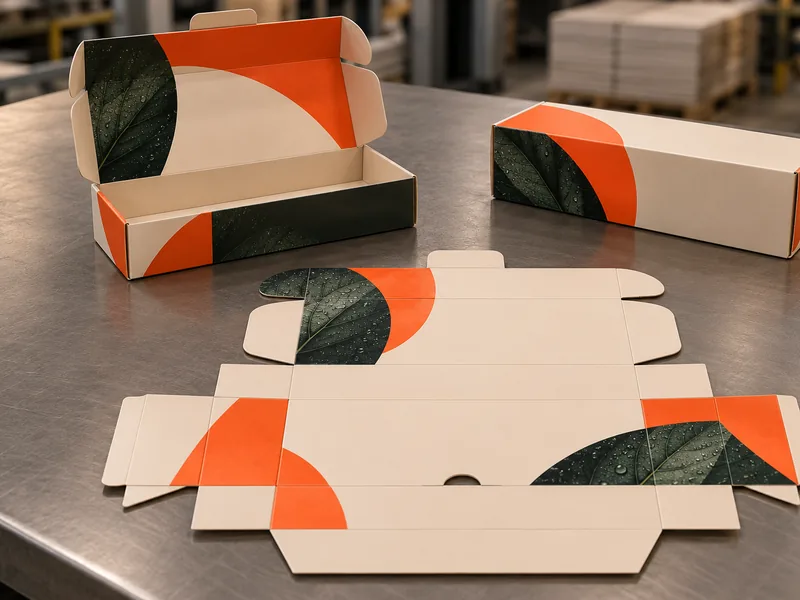
We use it for rigid point-of-sale pieces and POS displays, shop windows, stands and décor, signage and special projects. For packaging and other items produced in offset, we bring it in for short runs, versions or proofs, working to the same colour standard.
And on the roll: latex roll-to-roll
Digital printing does not stop at the flatbed. For anything supplied on the roll, such as vinyl, banners, textiles or wallpaper, we use latest-generation latex roll-to-roll printing, with water-based inks and prints that come off dry and ready to install. More on this in latex printing.
Digital or offset
Digital
Small quantities, prototypes and versions, or rigid substrates up to 5 cm thick that cannot go through an offset press.
Offset
Medium and long runs on paper, board up to 1.6 mm or plastic, with the unit cost falling as volume grows.
If you are unsure, we will help you decide what is best printed digitally and what in offset.
If you are a printer, agency or print broker, you can hand us a single stage or the entire project. We work in strict confidence and with full respect for your client: your client stays yours, and our brand never appears where it should not.
How to request a quote
Tell us the substrate, its thickness, the dimensions, the quantity and your deadline. We reply and quote as fast as we produce.
Frequently asked questions
What is the maximum format for UV digital printing?
Up to 1600 × 2500 mm, on our UV flatbed.
How thick can the substrate be?
Up to 5 cm.
What materials can you print on?
Practically any rigid substrate within those dimensions: board, corrugated board and foam board, plastics and PVC, acrylic, aluminium composite, wood panels and even furniture such as tables.
Can you print with white ink?
Yes: as a base under the colour, as a colour in its own right or selectively, on transparent, dark or metallic substrates.
Do you produce one-off pieces or short runs?
Yes. With no plates and no make-ready, digital printing is the obvious way to produce small quantities, prototypes and versions.